



What Are Hairdressing Foils Actually Made From?

What Are Hairdressing Foils Actually Made From?
(And Why It Matters for the Planet)
Every day, in salons all over the world, thousands of shiny little sheets get folded, painted and tucked into hair — then, all too often, tossed straight in the bin. Foils are one of the most-used tools behind the chair, but most of us never stop to think about what they're made of or where they end up. So let's pull back the foil, so to speak, and take a proper look.
So, what's in a foil?
Hairdressing foils are made from aluminium — the same versatile, lightweight metal you'll find in drink cans, food wrap and packaging. More specifically, foil is an alloy that's roughly 92–99% pure aluminium, with tiny amounts of other elements added for strength and workability.
That aluminium starts life as bauxite, an ore mined from the ground. It's refined to strip out impurities, smelted down into pure aluminium, then rolled — over and over — between huge chilled rollers until it's the wafer-thin, flexible sheet you know. It's a surprisingly energy-intensive journey for something we use for ninety seconds and throw away.
Why aluminium, and not something else?
There's a reason foils have stuck around. Aluminium is brilliant at the job:
- It's malleable. You can cut, fold and shape it to grip any section of hair, on any length.
- It conducts heat evenly, helping colour and lightener develop consistently.
- It isolates strands cleanly, keeping colour or bleach exactly where you want it and protecting the hair around it.
- It's lightweight and durable, so it holds its fold without weighing the hair down.
Plenty of alternatives have been floated over the years, but few match aluminium for performance — and, importantly, not all of them are actually more sustainable, despite the claims.
The good news: aluminium is infinitely recyclable
Here's the part worth celebrating. Aluminium is one of the few materials that can be recycled over and over, indefinitely, without losing quality. Melt it down and it's ready to become something new.
And recycling it barely sips energy by comparison. Reprocessing aluminium uses up to around 95% less energy than making it new from raw bauxite. That's a massive saving in carbon, resources and mining impact — every single time a foil is recycled instead of binned.
How to do better behind the chair
The footprint of foil isn't really about the metal — it's about how we source it and what happens to it next. A few simple switches make a genuine difference:
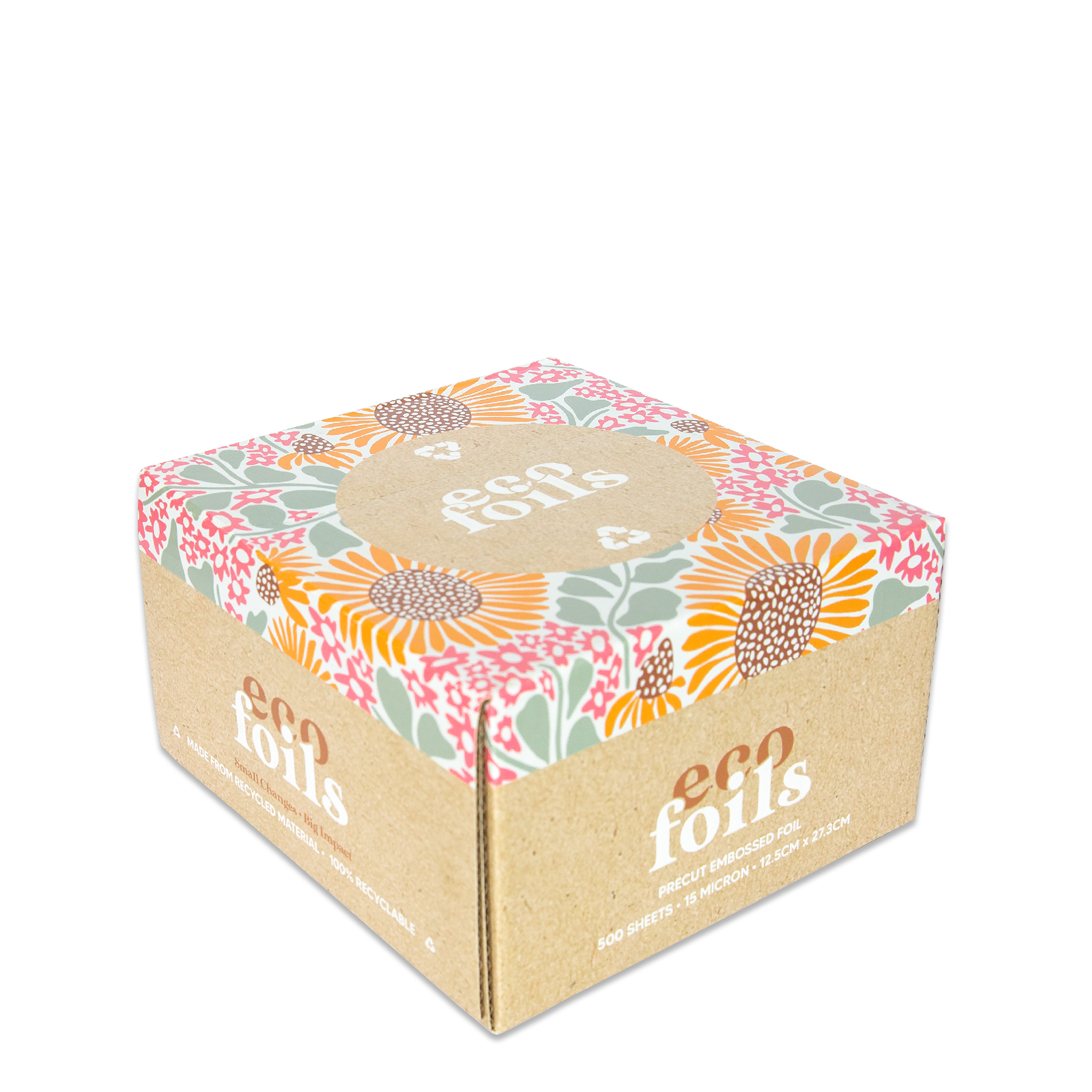
- Choose foils made with recycled aluminium content. Using recycled material instead of virgin aluminium slashes the carbon cost before the foil even reaches your salon.
- Recycle your used foils. In Australia, programs like Sustainable Salons collect used foils, colour tubes and other salon metals, divert them from landfill and give them a second life. (The recovered aluminium usually becomes other products — construction bars, castings and the like — rather than new foils, but it stays in the loop and out of the ground.)
-
Look past the foil, too. Sustainable packaging, carbon-offset shipping and responsibly sourced materials all stack up.
Small sheet, big impact
A foil is a tiny thing. But multiply it by every head of highlights, in every salon, every day, and the impact is anything but small. The beautiful part is that this is one of the easiest meaningful changes a salon can make — choose better, recycle properly, and a single-use throwaway becomes part of a circle that never ends.
Foil responsibly, style sustainably. It really is that simple.